
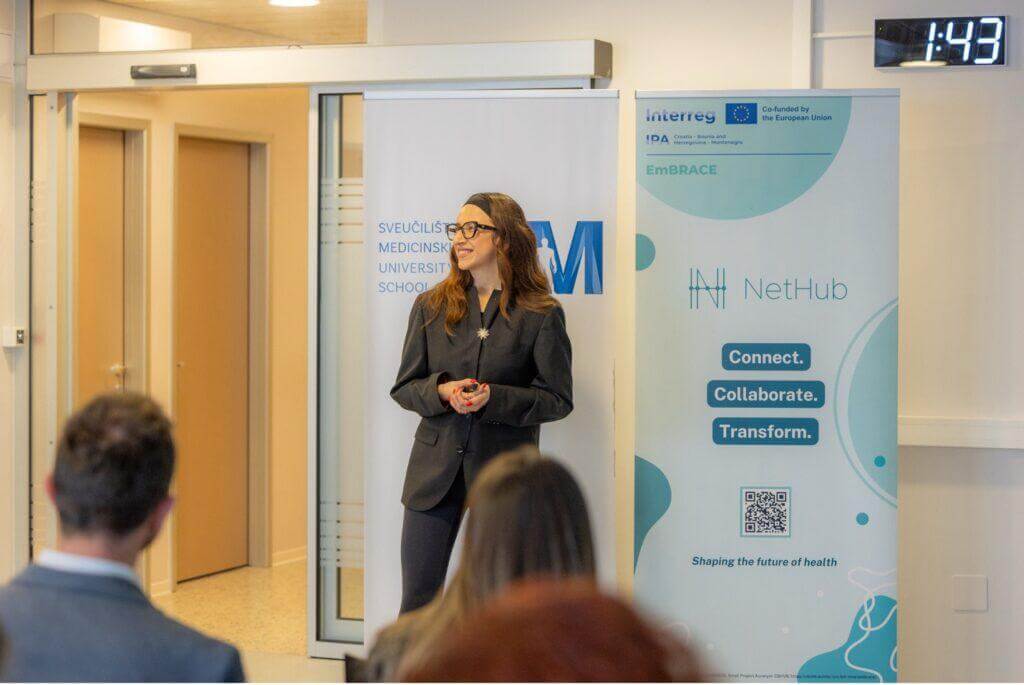
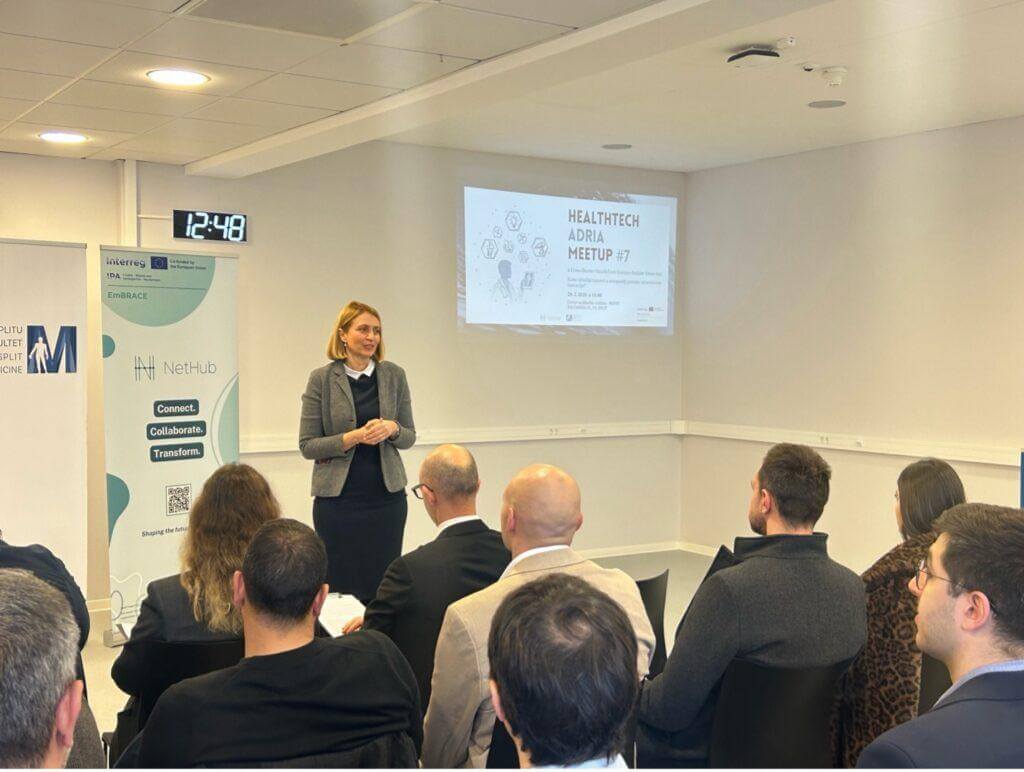
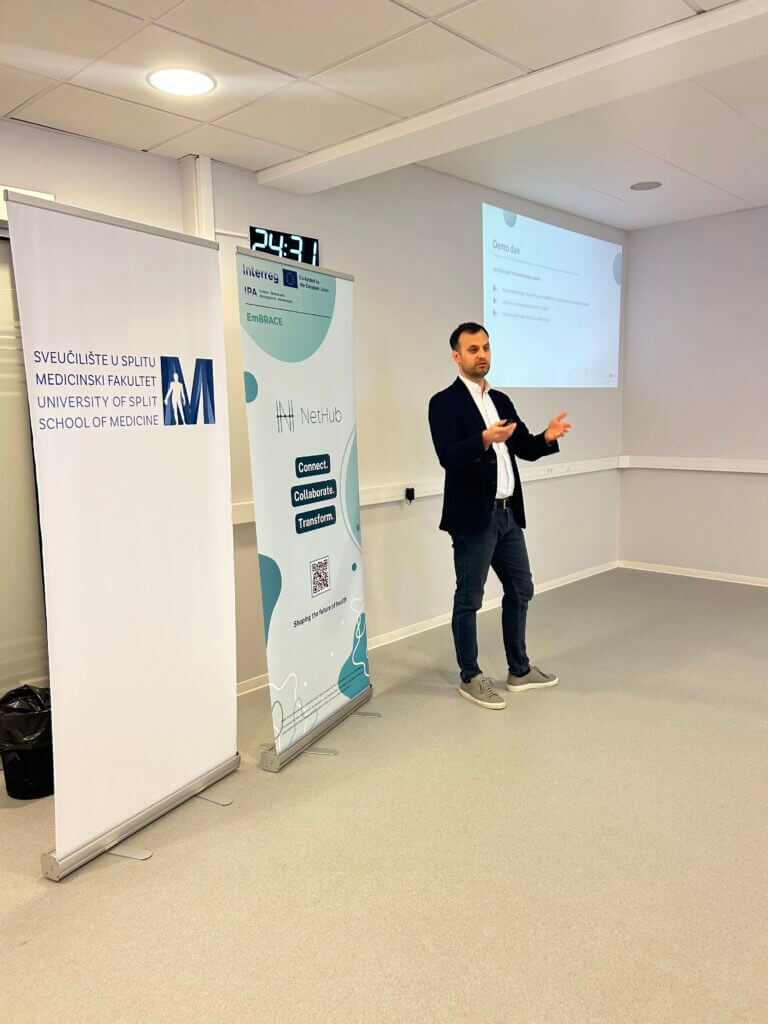
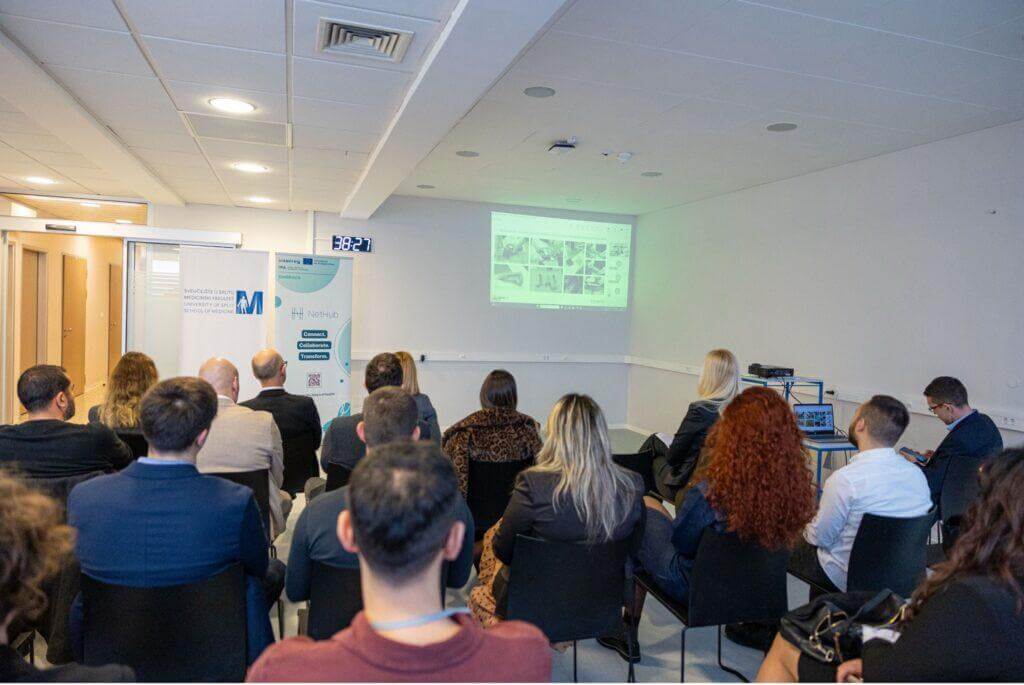
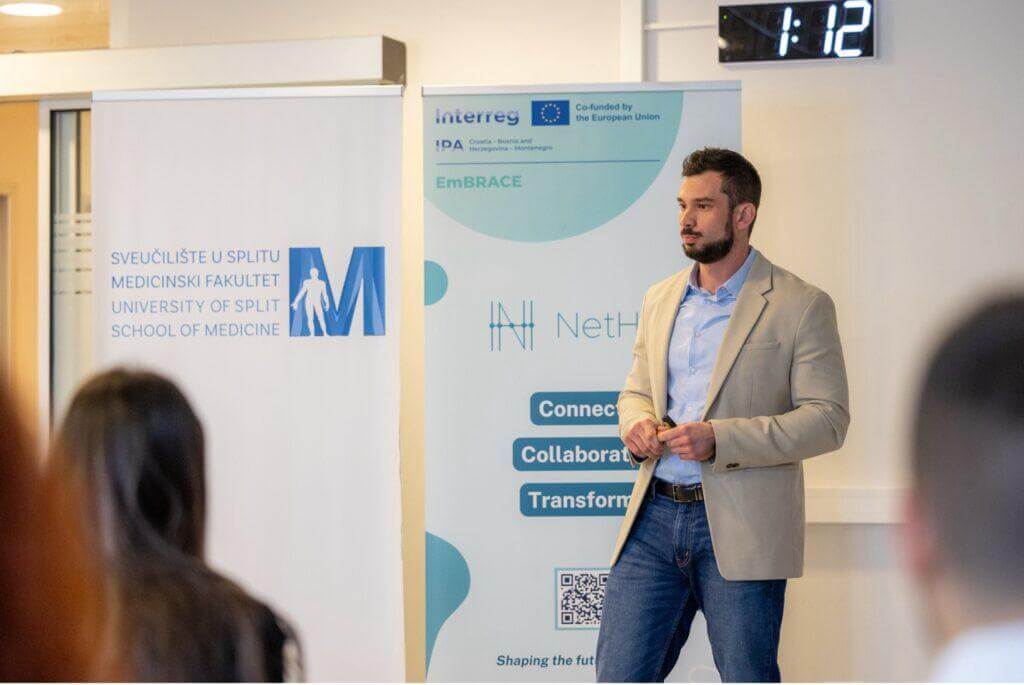
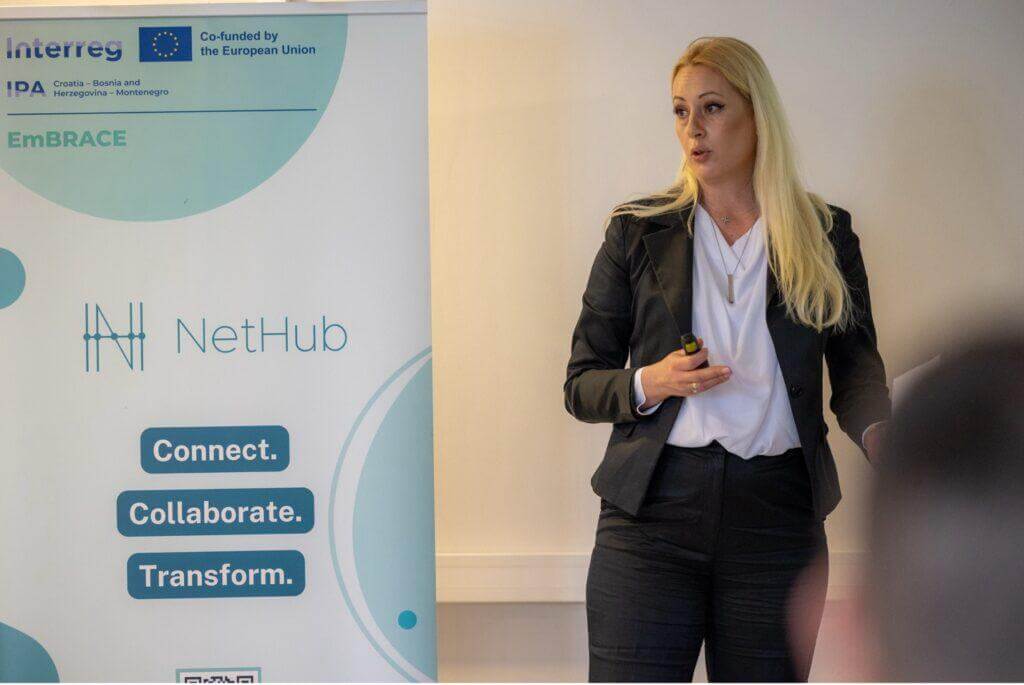
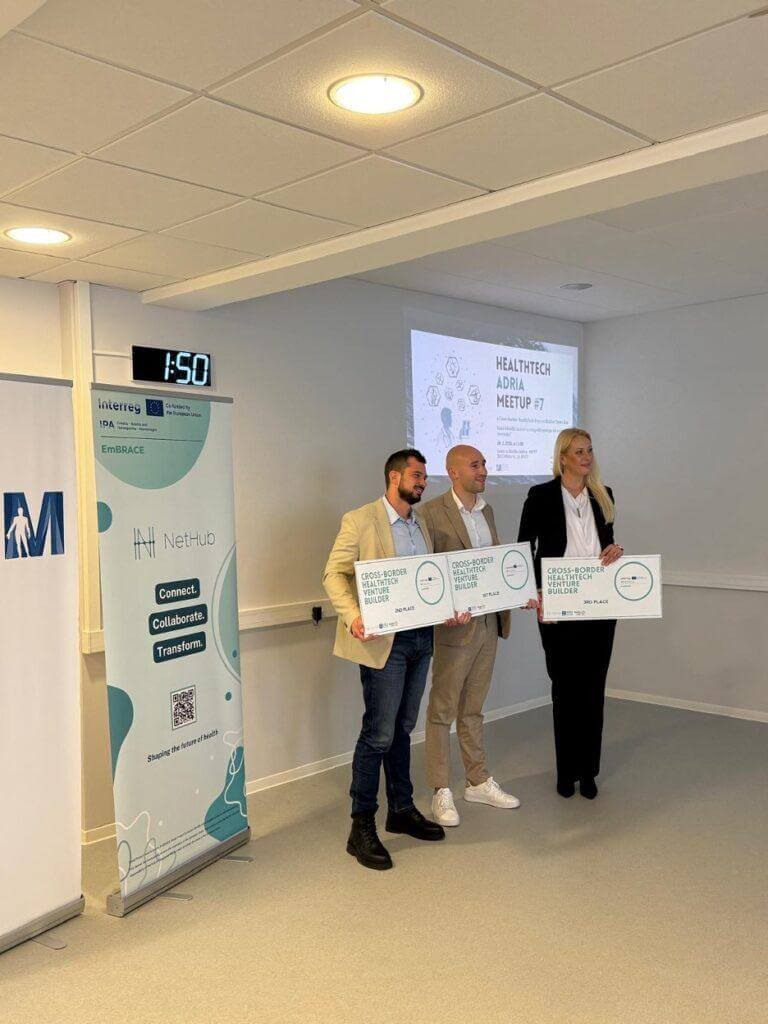
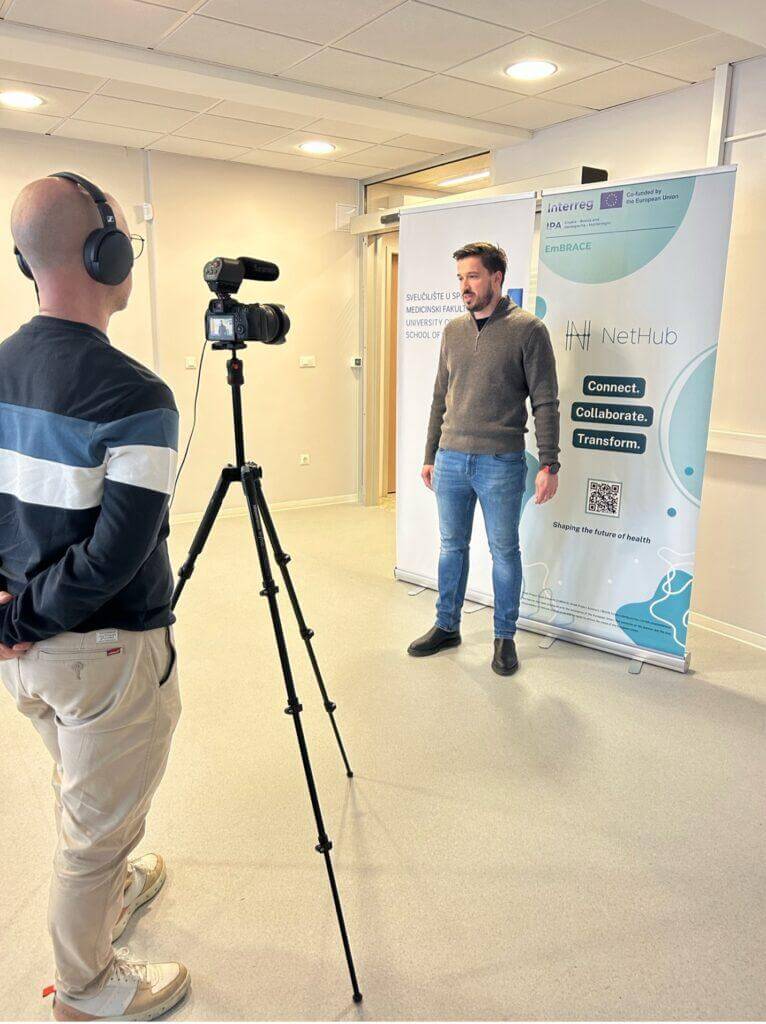
The seventh edition of the Healthtech Adria Meetup was held on February 20, 2026 at the Clinical Skills Center in Split. The meetup was jointly organized by NetHub and Medical faculty in Split, and the special feature of this edition was its connection with the project Cross-Border HealthTech Venture Builder, which is implemented within the framework of the EmBRACE project co-financed through the Interreg VI-A IPA Program Croatia – Bosnia and Herzegovina – Montenegro 2021-2027. This connection of Meetup with the active pilot phase of the international project further enriched the program and gave it a strong cross-border and development dimension. The central part of the event was the Project Demo Day, during which five teams presented their solutions to a panel of experts.
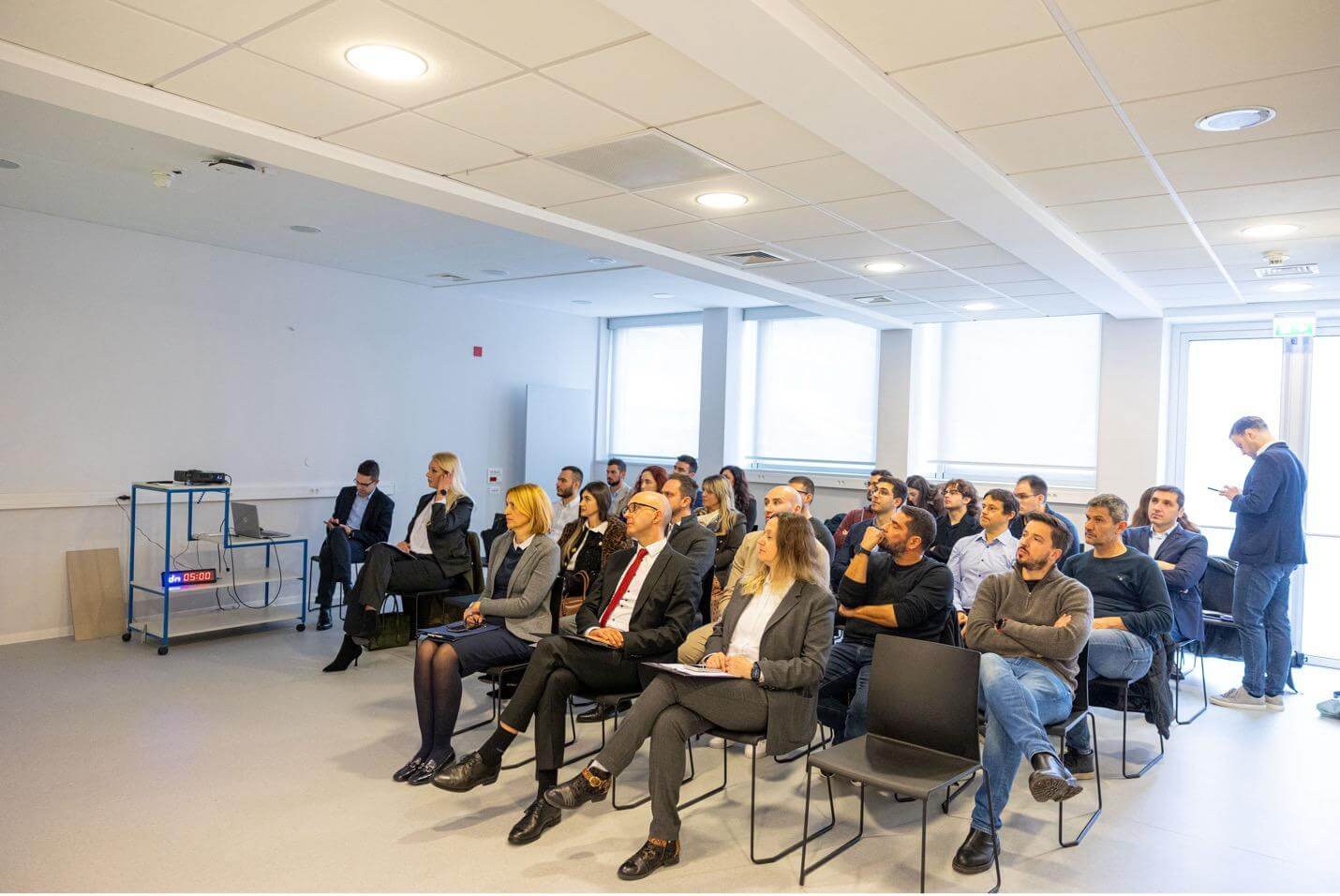
From edition to edition, Healthtech Adria Meetup confirms its role as a platform that systematically connects clinical practice, science and entrepreneurship in healthcare. In this edition, the emphasis is placed on concrete results, i.e. innovative solutions developed through a structured cross-border entrepreneurial-educational program aimed at clinicians.
The Cross-Border HealthTech Venture Builder project is aimed at developing and piloting a cross-border entrepreneurial and educational program for clinicians, with the aim of stimulating innovation development directly in the clinical environment and strengthening the healthtech innovation ecosystem in Croatia, Bosnia and Herzegovina and Montenegro. The program provided clinicians with structured education, mentoring support and practical tools for identifying unmet health needs, developing innovative solutions and further validating them in collaboration with industry and other relevant stakeholders. The project systematically connects healthcare institutions, the MedTech industry, startups, researchers and investors, with an emphasis on the applicability of solutions in everyday clinical practice.
The program began with a welcoming speech by Assoc. Prof. Dr. Sc. Krešimir Dolić, Director of KBC Split, who emphasized:
“Medicine is developing rapidly today and doctors are no longer just users of technology, but active participants in its development. Such projects enable ideas created in clinical practice, with mentoring and institutional support, to become real and applicable solutions for patients.”
On behalf of the academic community, Prof. Dr. Sc. Renata Pecotić, Dean of the Faculty of Medicine in Split, emphasizing the importance of integrating entrepreneurship and innovation into medical education:
“The Faculty of Medicine in Split is continuously expanding the education of its students and employees towards entrepreneurship and innovation so that knowledge from the classroom finds its way to real solutions in practice. Cooperation with NetHub and international partners allows us to build a new future of medical education and healthcare together.”
The opening speech was given by Marko Mimica, Director of NetHub, who presented the Cross-Border HealthTech Venture Builder project as a model of systematic support for the development of clinical innovations:
“Examples from orthopedics, neuronavigational robotics and screening programs have shown that clinicians are often the most competent to recognize where the system can be more efficient, safer and of higher quality. The cross-border approach further emphasized the importance of international cooperation in reducing the innovation gap by addressing the fragmentation of the European healthcare system. The innovation process in healthcare is extremely complex because it involves healthcare institutions, science, industry, startups and investors, which is why structured support from idea to market is necessary.”
Additional importance to the program was given by an online lecture by Michael Librus, founder of Synergy3DMed, entitled “Personalized Healthcare Solutions Using Pre-Op Planning, AI & 3D Technology ogies”, in which he presented how advanced technologies are integrated into personalized medicine and clinical practice.
The central part of the event was the Project Demo Day, during which the clinicians involved in the program presented innovative solutions developed through a structured process – from the identification of an unmet health need to the design of the solution and preparation for the presentation in front of an expert jury. Five teams took part in the final stage of the program – two from Croatia, one from Bosnia and Herzegovina and two from Montenegro.
The pitching sessions enabled an immediate exchange of experiences, as well as concrete feedback expert jury, with a focus on clinical applicability, market potential and further steps in the development of the solution.
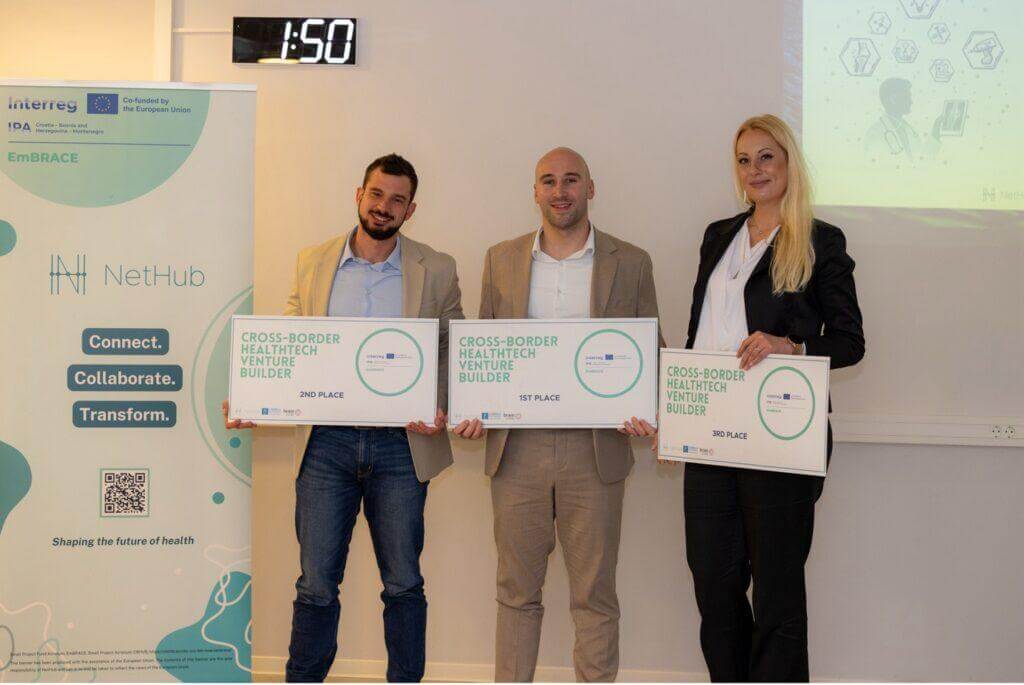
First place for the best pitch was won by Viktor Vegan from KBC Split, with a solution for an automated system for standardized, faster and safer preoperative preparation of the leg for orthopedic procedures in the knee area. Second place went to Damir Franjić from Bosnia and Herzegovina, for the concept of a digital system for monitoring the installation of endoprostheses and clinical outcomes, aimed at improving the quality of care. Third place was won by Ivana Obradović from Montenegro, for the development of sterile surgical sets for single use made of recyclable materials, with the aim of increasing patient safety and reducing the risk of hospital infections.
The importance of a structured path for the development of innovations was also addressed by Arsen Ivanišević, MD, specialist in orthopedics and traumatology, orthopedic surgeon at KBC Split and director Xiphoid:
“Through our own experience in developing orthopedic solutions, we have learned how demanding it is for innovations to enter the healthcare system and how such a path has practically never existed before. That is why I strongly support events like this, which enable young innovators to enter the system in a structured way and develop their own products with the support of public institutions.”
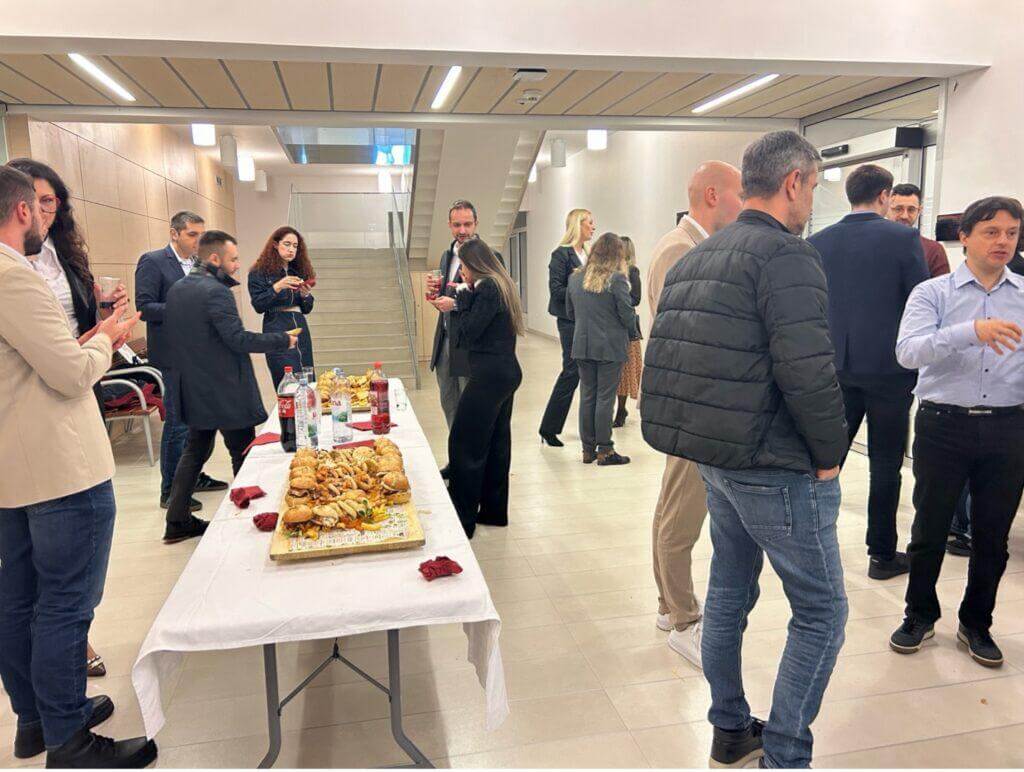
As in previous editions, it was the final networking event that confirmed the importance of Meetup as a platform for exchanging contacts and initiating new collaborations. The participation of clinicians and experts from Croatia, Bosnia and Herzegovina and Montenegro showed the potential for developing solutions applicable in different healthcare systems and opened up space for future joint projects and partnership collaborations. The discussions that followed the official part of the program showed that there is a real interest in further connecting hospital systems, industry and academia.
This edition of the Meetup clearly showed that the region has ideas, initiative and expertise, but also that it is necessary to systematically encourage the development of solutions that arise precisely in the clinical environment. It is hospitals, through their daily work with patients, that represent the most important source of real problems worth solving. The Cross-Border HealthTech Venture Builder project and the seventh edition of the Healthtech Adria Meetup confirmed that the model in which innovations come from hospitals – with mentoring, educational and institutional support – is a sustainable and necessary direction for the development of the regional healthtech ecosystem.