

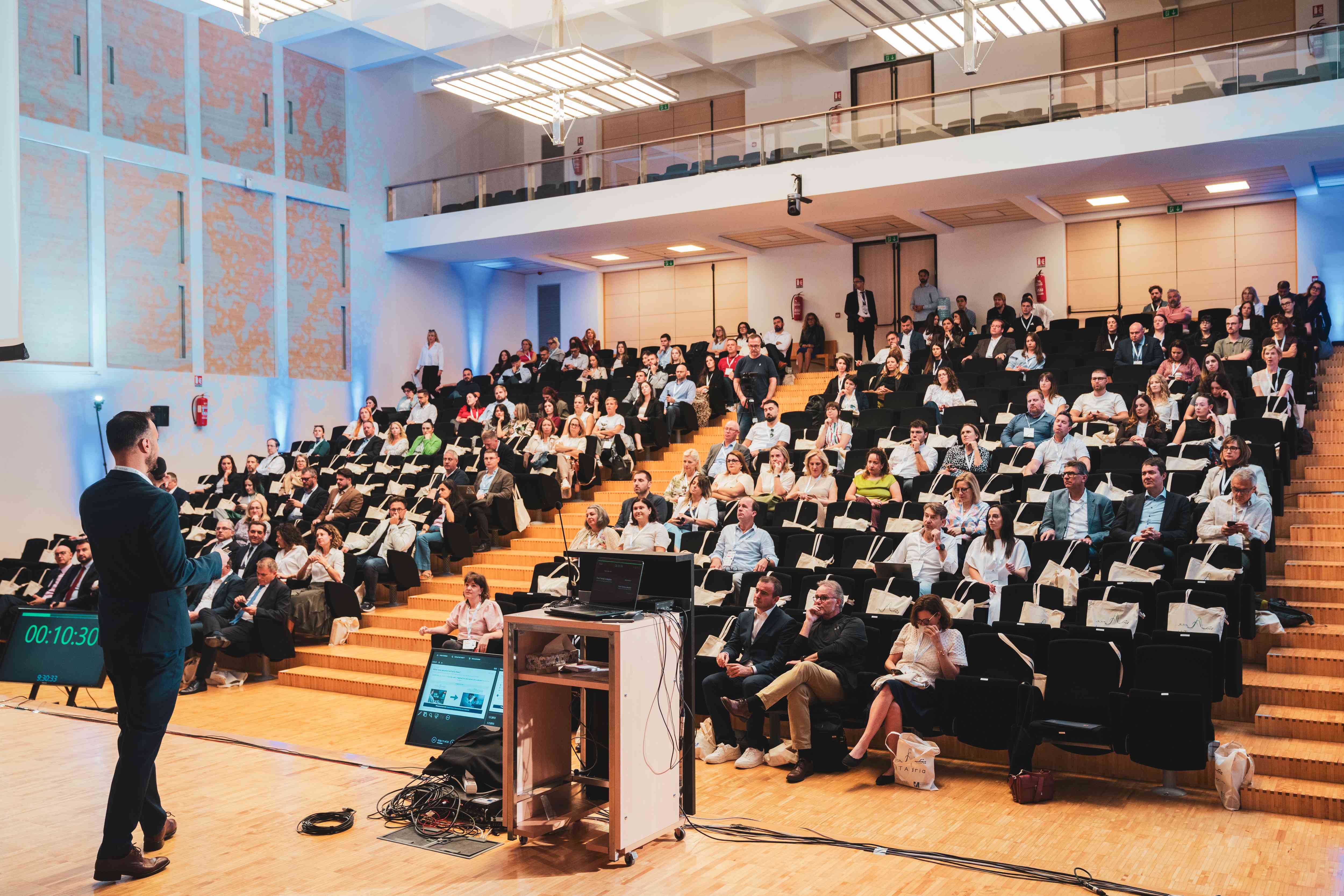
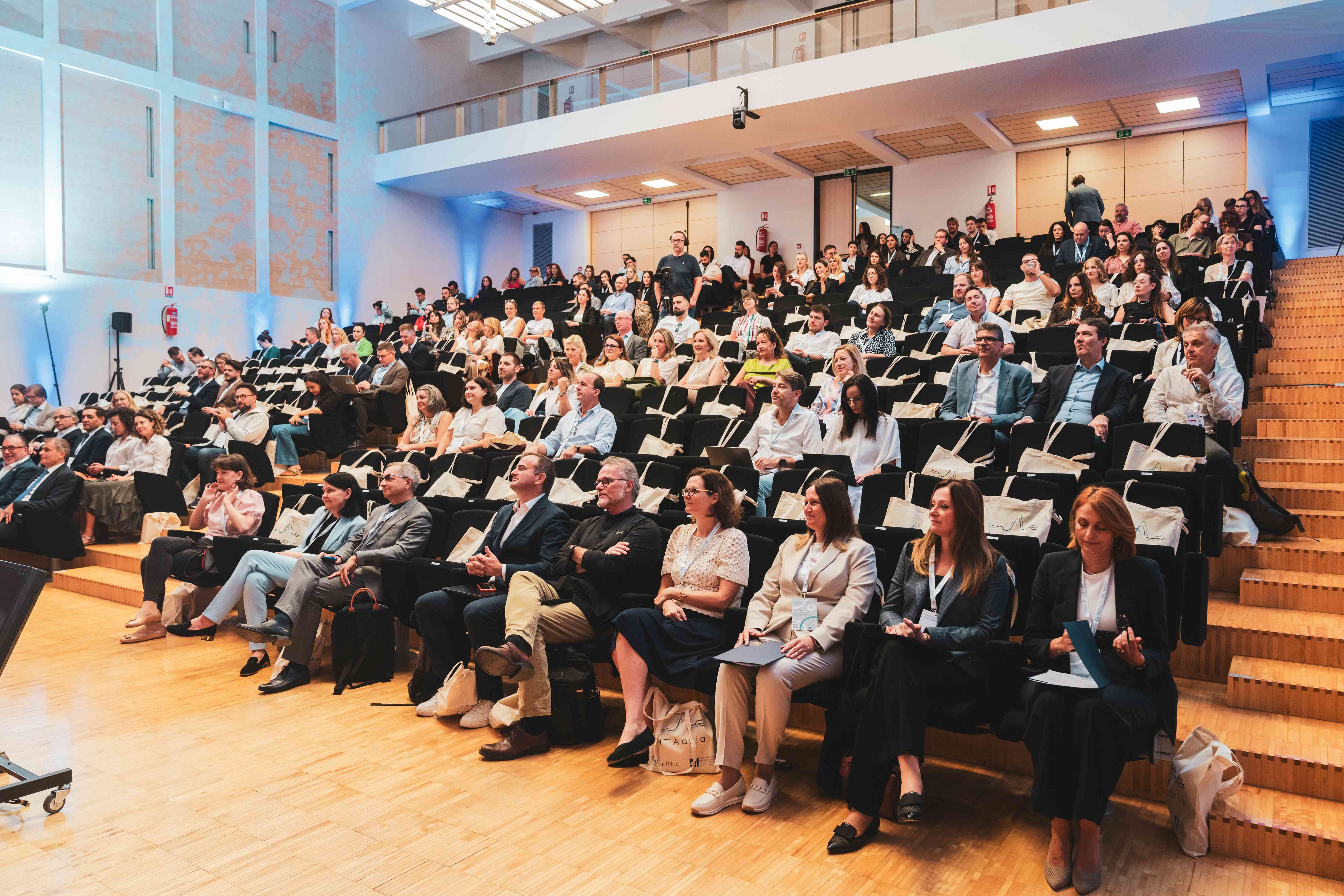
The third edition of the Healthtech Adria Conference, held on 1–2 October 2026 at the University of Split School of Medicine, brought together more than 300 participants and over 50 speakers and panellists from 15+ countries, making it the largest edition of the conference to date.
Organised by NetHub in collaboration with the University of Split School of Medicine, Healthtech Adria once again brought together healthcare professionals, researchers, policymakers, entrepreneurs, investors and innovation experts from Croatia and Southeast Europe around a shared goal: to create stronger connections between good ideas, healthcare needs and real-world implementation.
Over three editions, the conference has grown into much more than a two-day programme. It has become a meeting point for people who research, develop, regulate, finance and implement healthcare innovation, creating an environment where different parts of the ecosystem can meet, exchange perspectives and start collaborations that would otherwise be difficult to build.
This year’s edition placed particular emphasis on one of the biggest challenges facing health innovation today: moving from development to adoption.
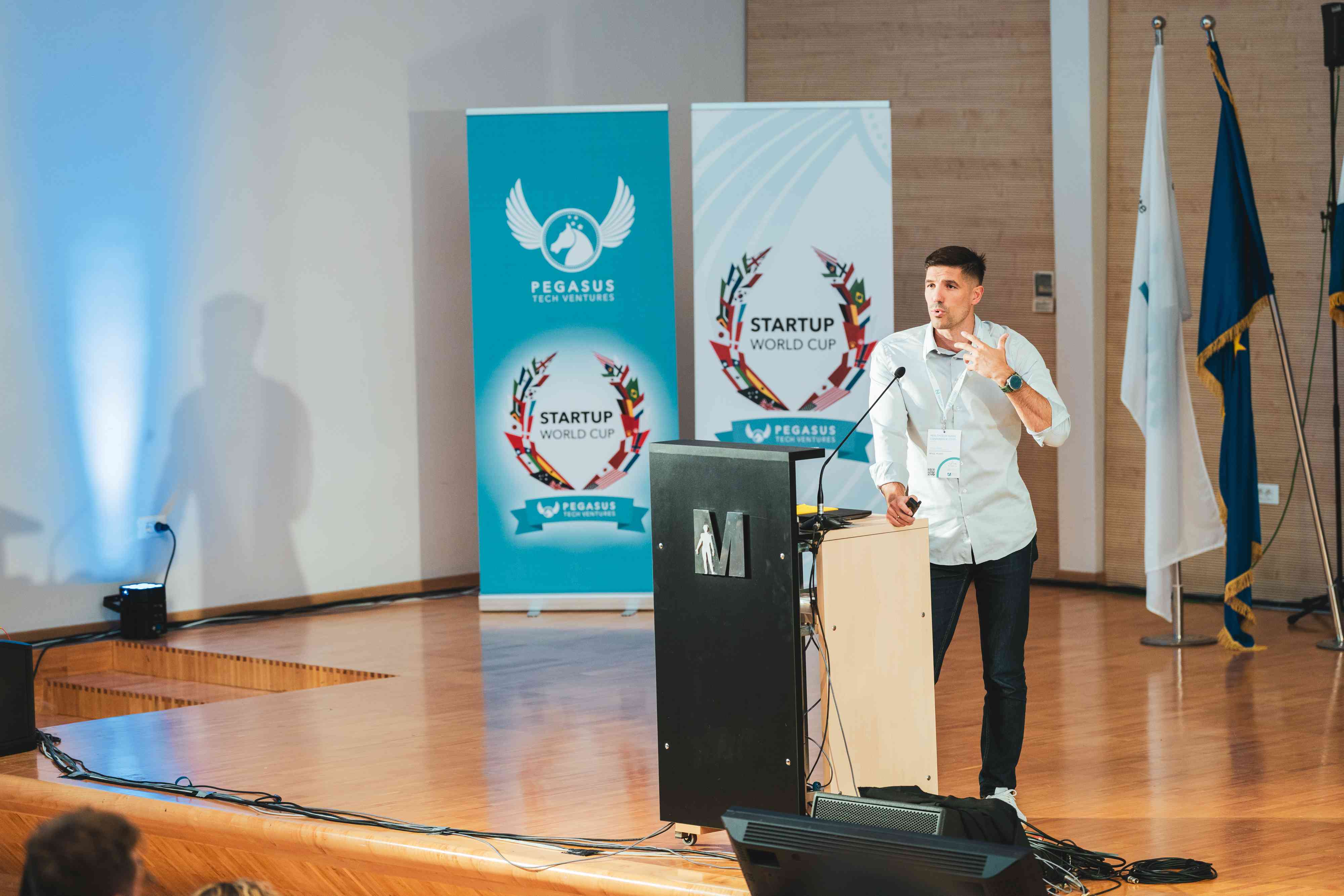
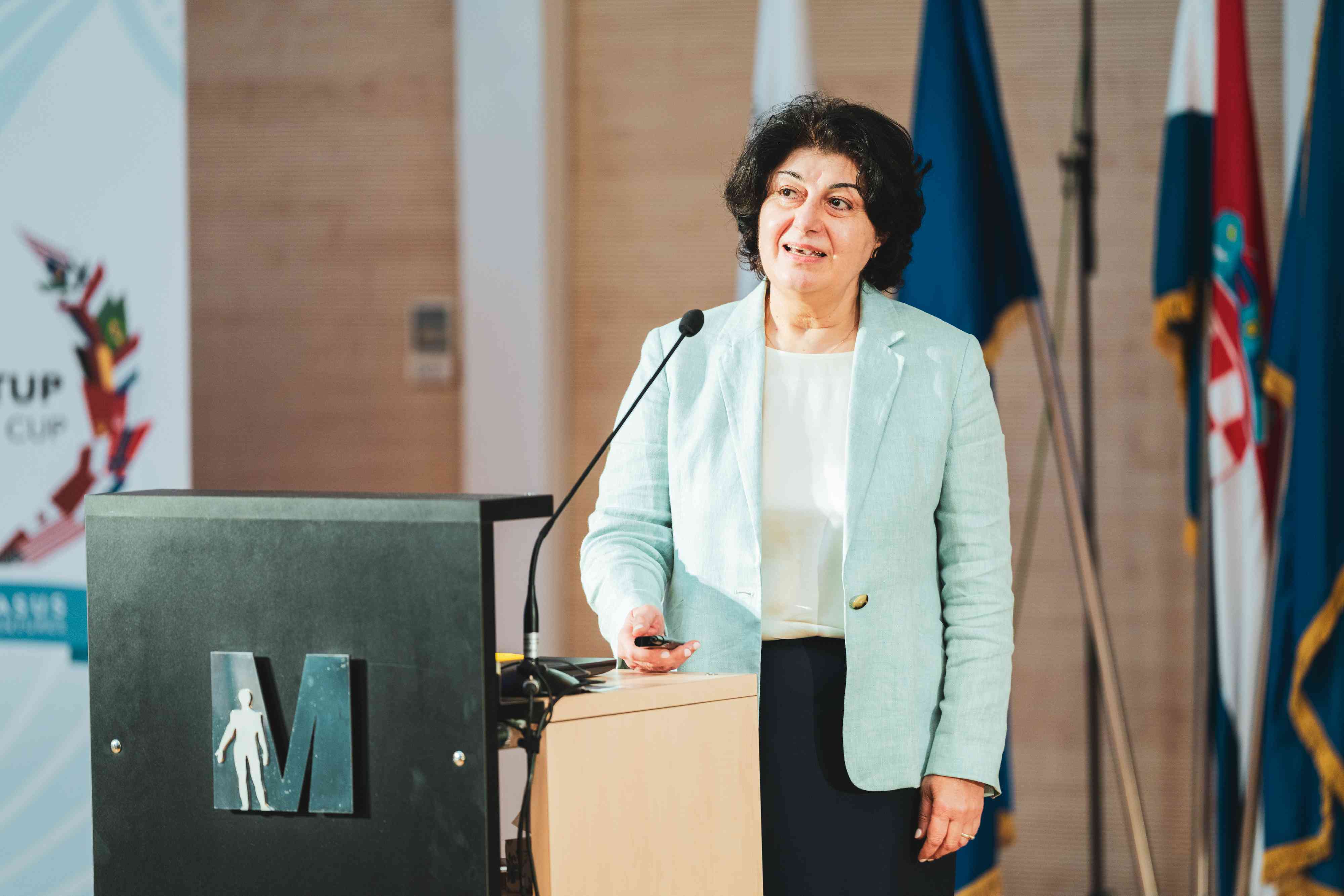
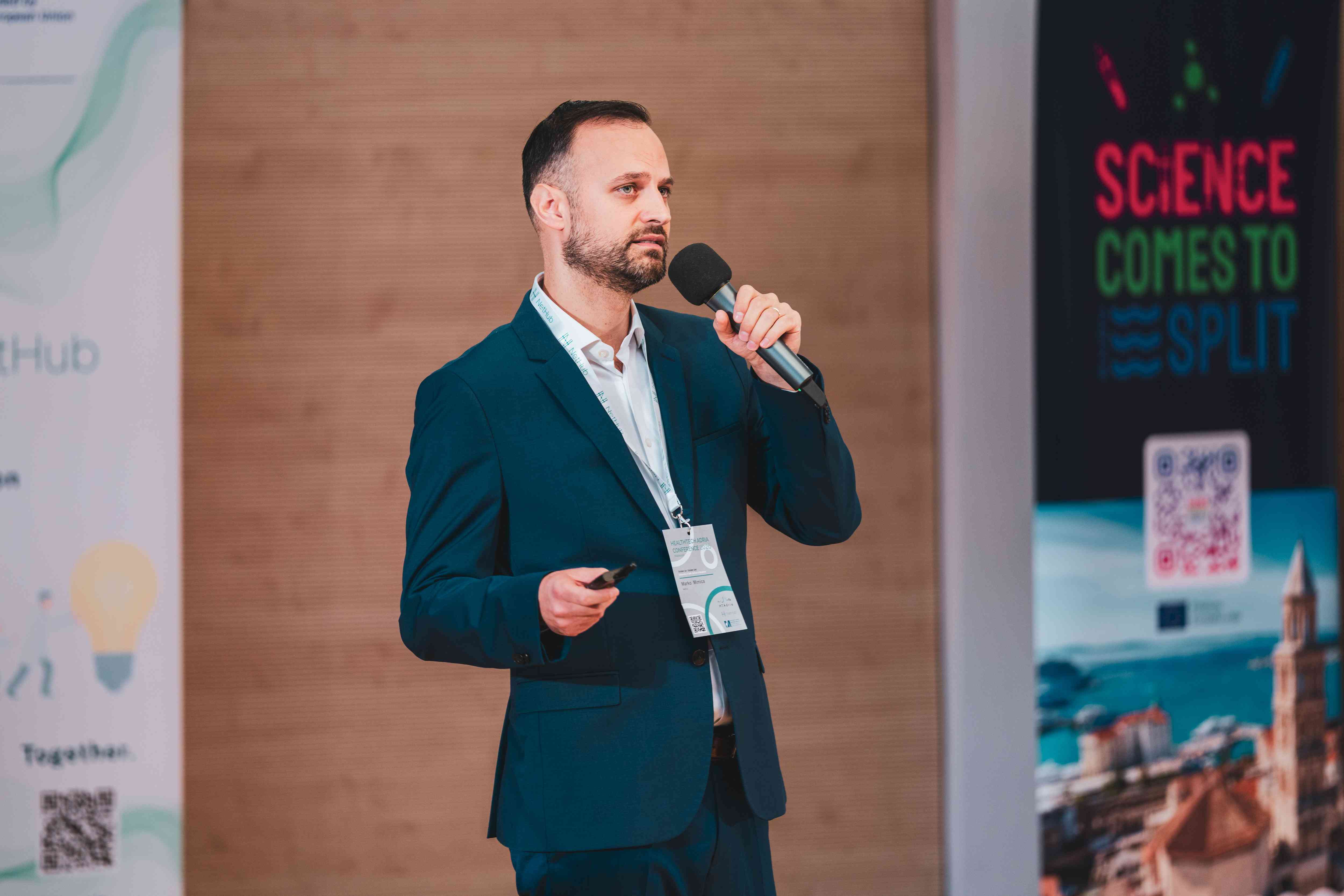
In his opening talk, No Adoption, No Innovation, NetHub CEO Marko Mimica addressed the gap between successful research or pilot projects and solutions that actually become part of healthcare practice. His message set the tone for the first day: funding and technology development are important, but real impact only begins when healthcare institutions, professionals and patients can use the solution in practice.
The scale of this challenge was illustrated through an analysis of the Croatian health innovation ecosystem. Over the previous decade, 210 health innovation projects worth approximately €175 million had been supported through national research and innovation programmes, involving 92 startups and companies, 23 research institutions and 16 healthcare providers. At the same time, the transition from funded projects to validation, procurement, routine use and wider adoption continues to be one of the hardest parts of the innovation process.
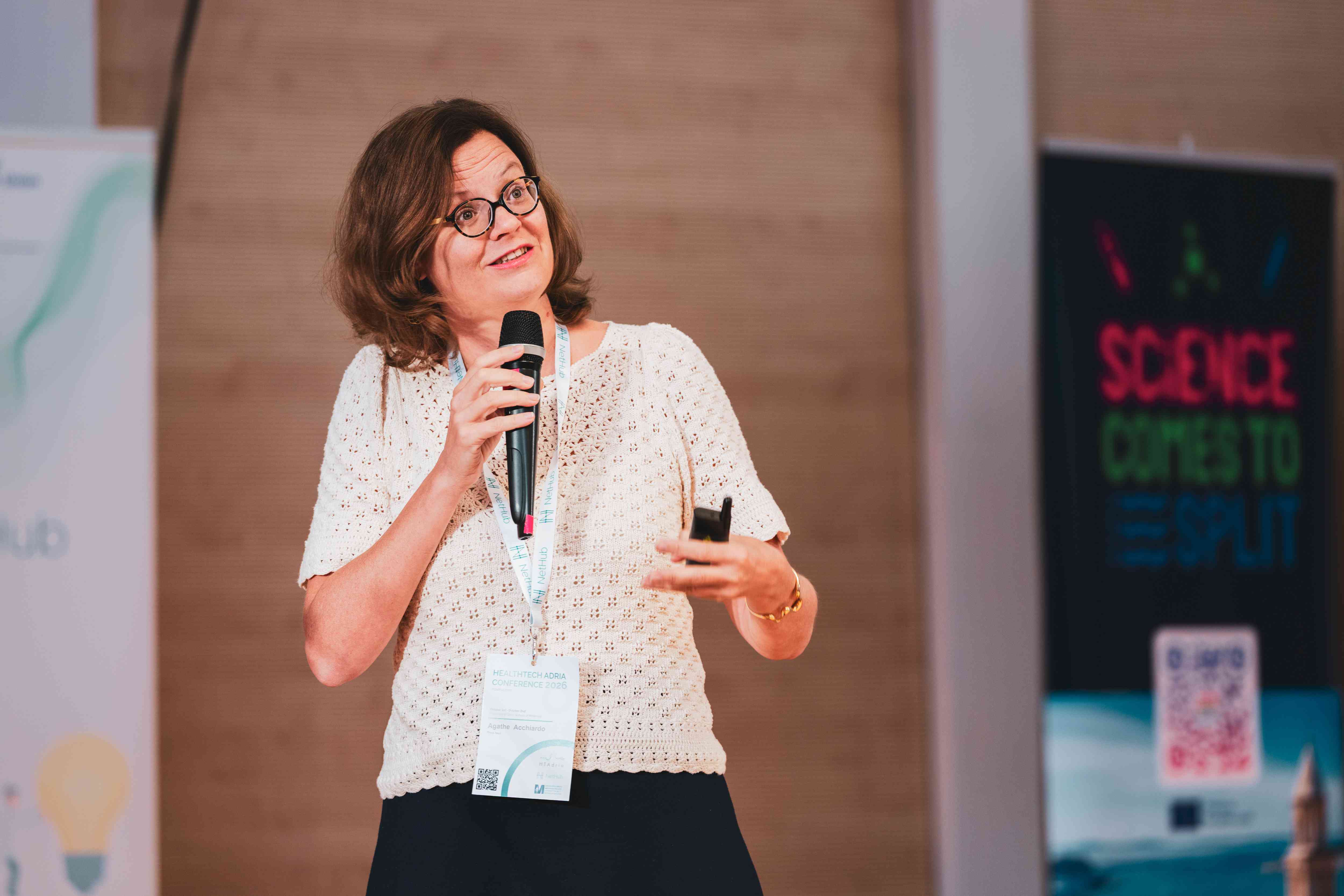
Experts including Agathe Acchiardo from Think Next, Lucien Engelen from Transform.Health, and Jordi Serrano Pons from P8 Health explored the future of healthcare systems, changing models of care and the difference between trends that generate attention and innovations that are actually ready for adoption. Together, their sessions highlighted that healthcare transformation depends not only on better technologies, but also on organisational readiness, workforce acceptance, sustainability and the ability to integrate new solutions into existing systems.
The role of healthcare institutions and public policy was another strong focus. Jaroslaw J. Fedorowski, President of the Polish Hospital Federation, addressed value-based healthcare and stronger continuity between hospital and home care. A strong focus was also placed on policy and the role of healthcare institutions in creating an environment in which innovation can be tested and adopted.
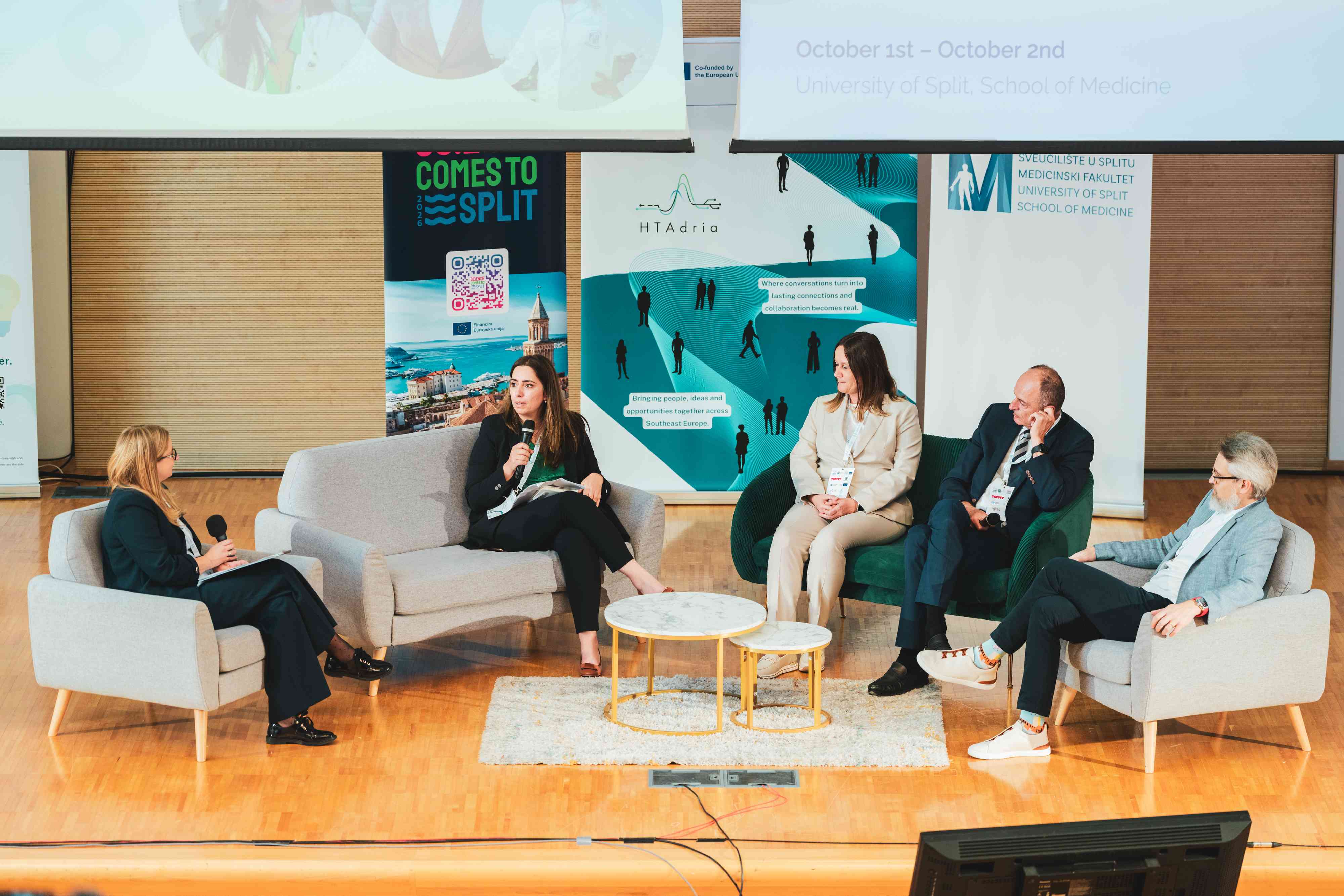
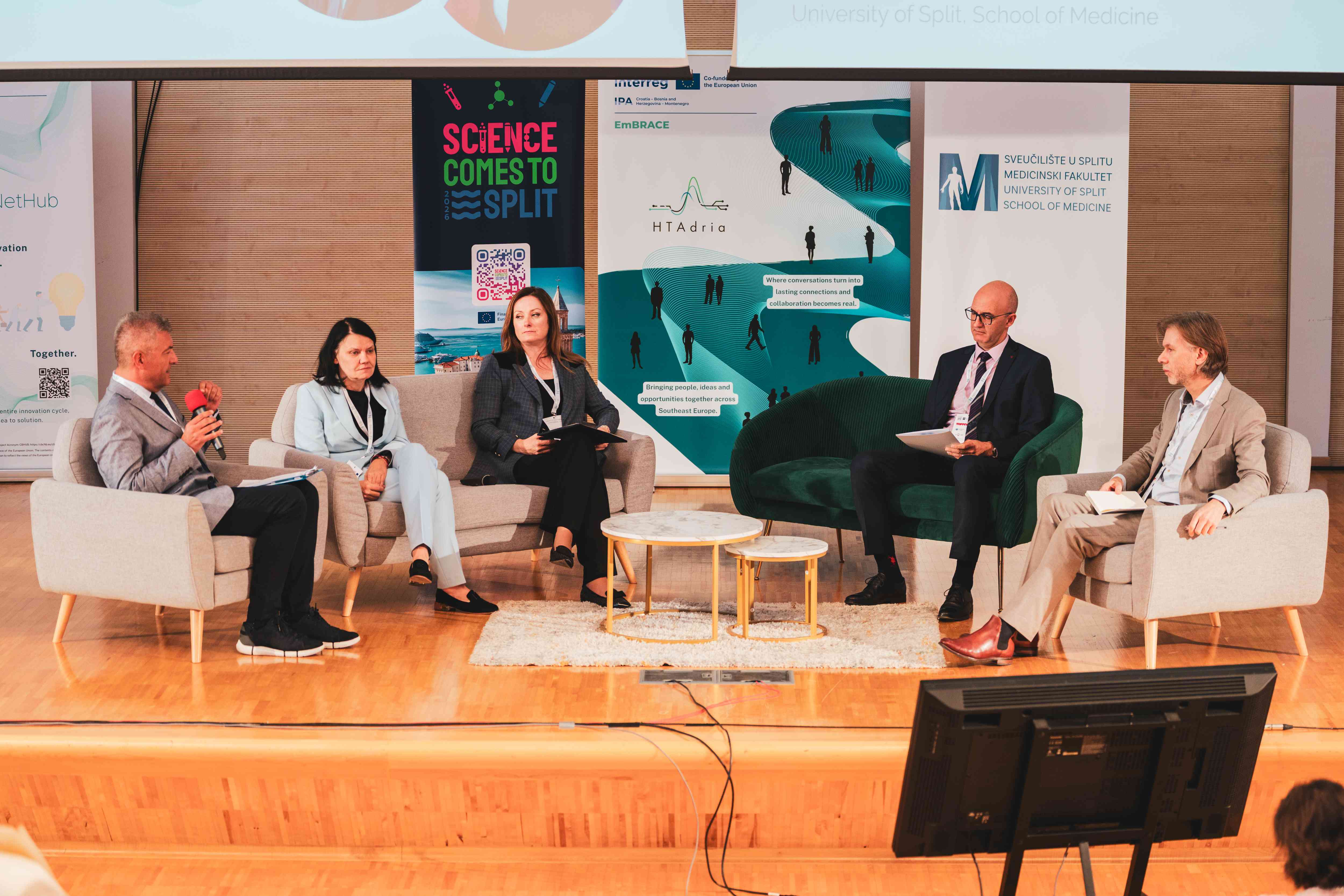
One of the key discussions of the day brought together Tony Young, National Clinical Director for Innovation at NHS England; Željka Josić, State Secretary at the Ministry of Health of the Republic of Croatia; Katarzyna Kacperczyk, Undersecretary of State at the Ministry of Health of the Republic of Poland; and Krešimir Dolić, CEO of the University Hospital of Split, moderated by Renata Pecotić, Dean of the University of Split School of Medicine. Together, they discussed what healthcare systems need in order to move promising solutions beyond pilot projects and make innovation easier to test, adopt and scale in everyday practice.
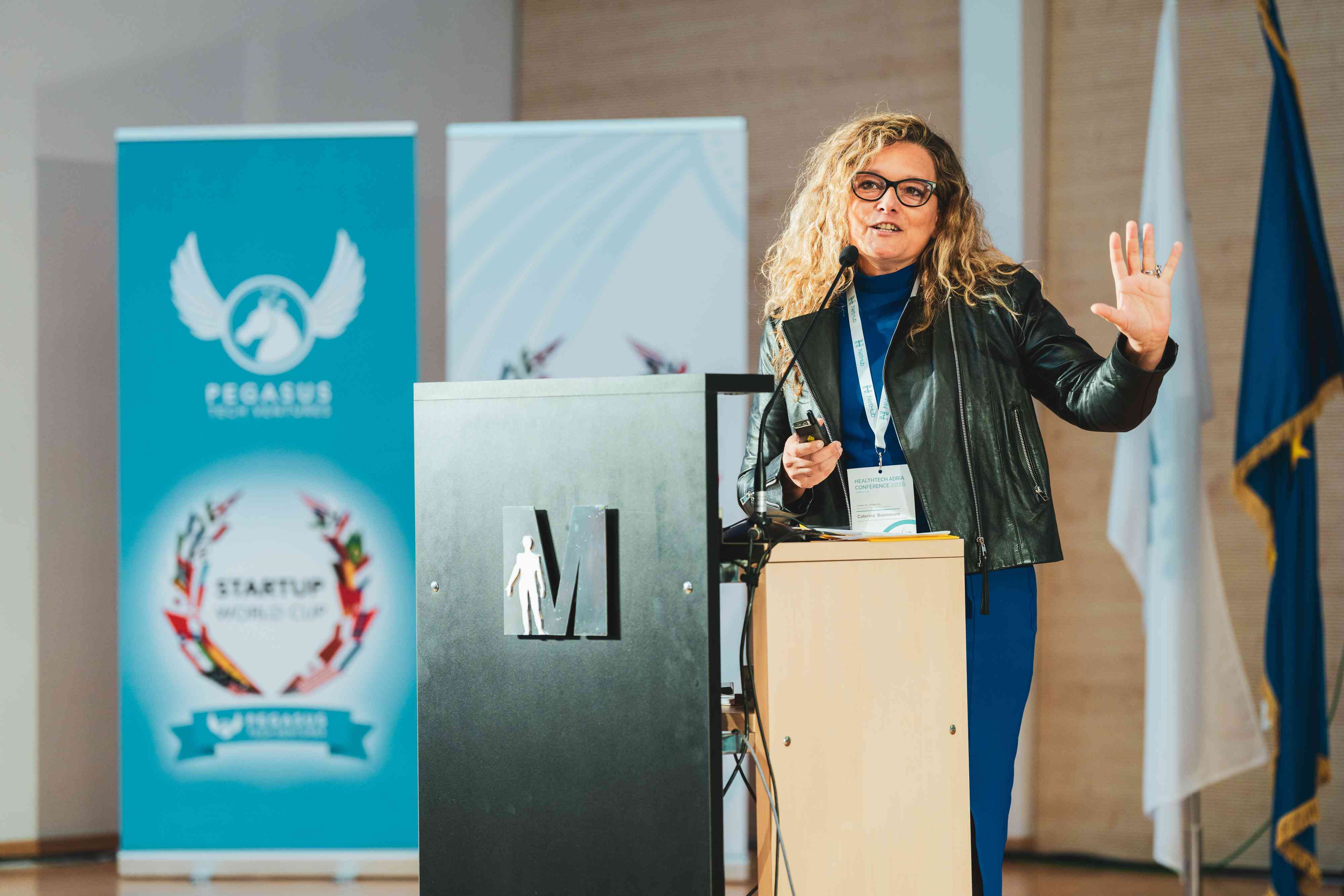
From there, the programme moved into some of the practical mechanisms that can help innovation advance. Aline Noizet from Digital Health Connector looked at innovation procurement as a strategic pathway for bringing new technologies into hospitals, while Caterina Buonocore from APRE focused on how organisations from Southeast Europe can strengthen their position within Horizon Europe, including Cluster 1 – Health, the Cancer Mission and WIDERA.
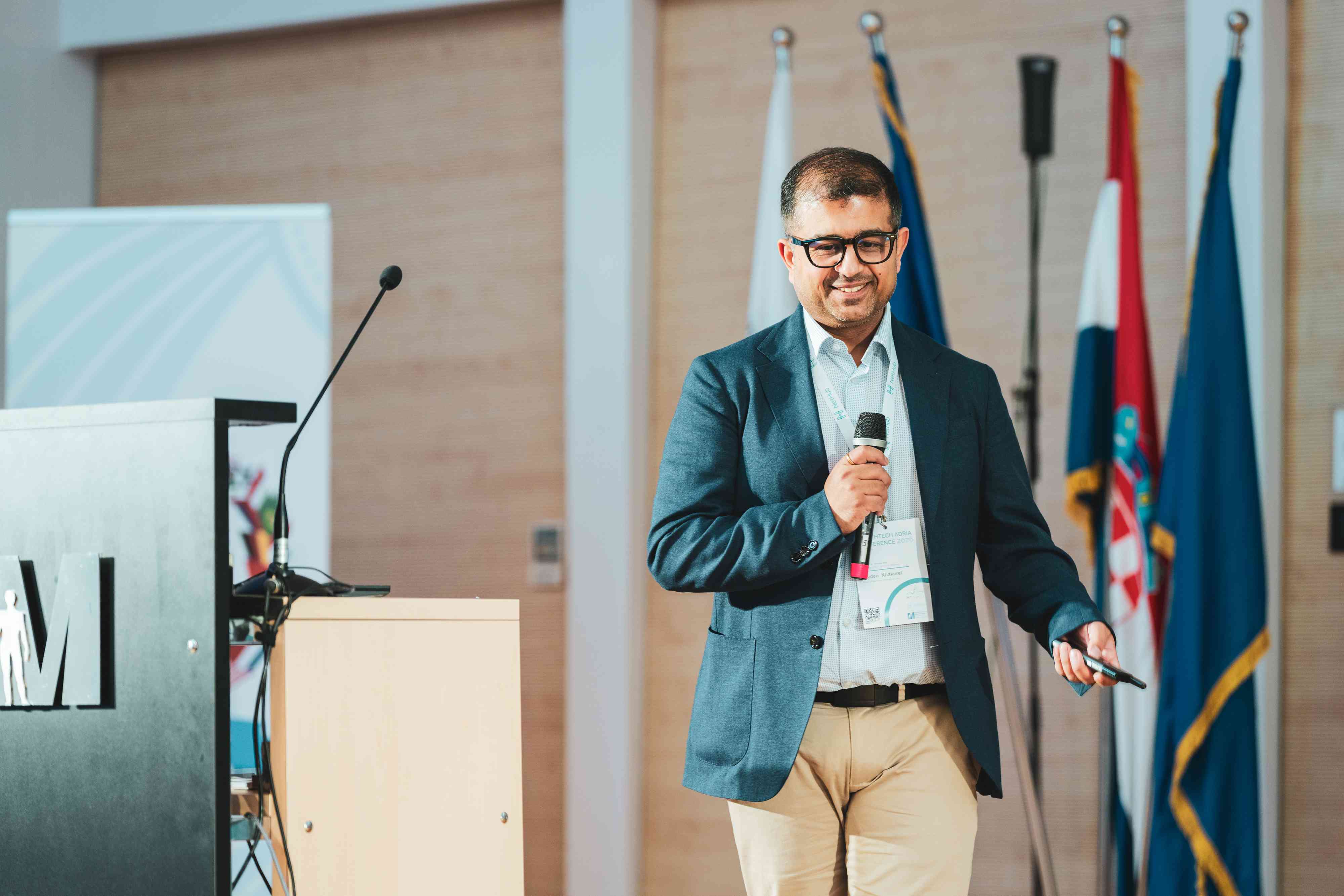
The afternoon shifted closer to research, data and translation. Jayden Khakurel from the University of Tartu, Nana Bit-Avragim from iHospital InnoLab, and Joanna Broy from EIT Health brought different perspectives on how data, business models and stronger partnerships can help research move towards implementation and market relevance.
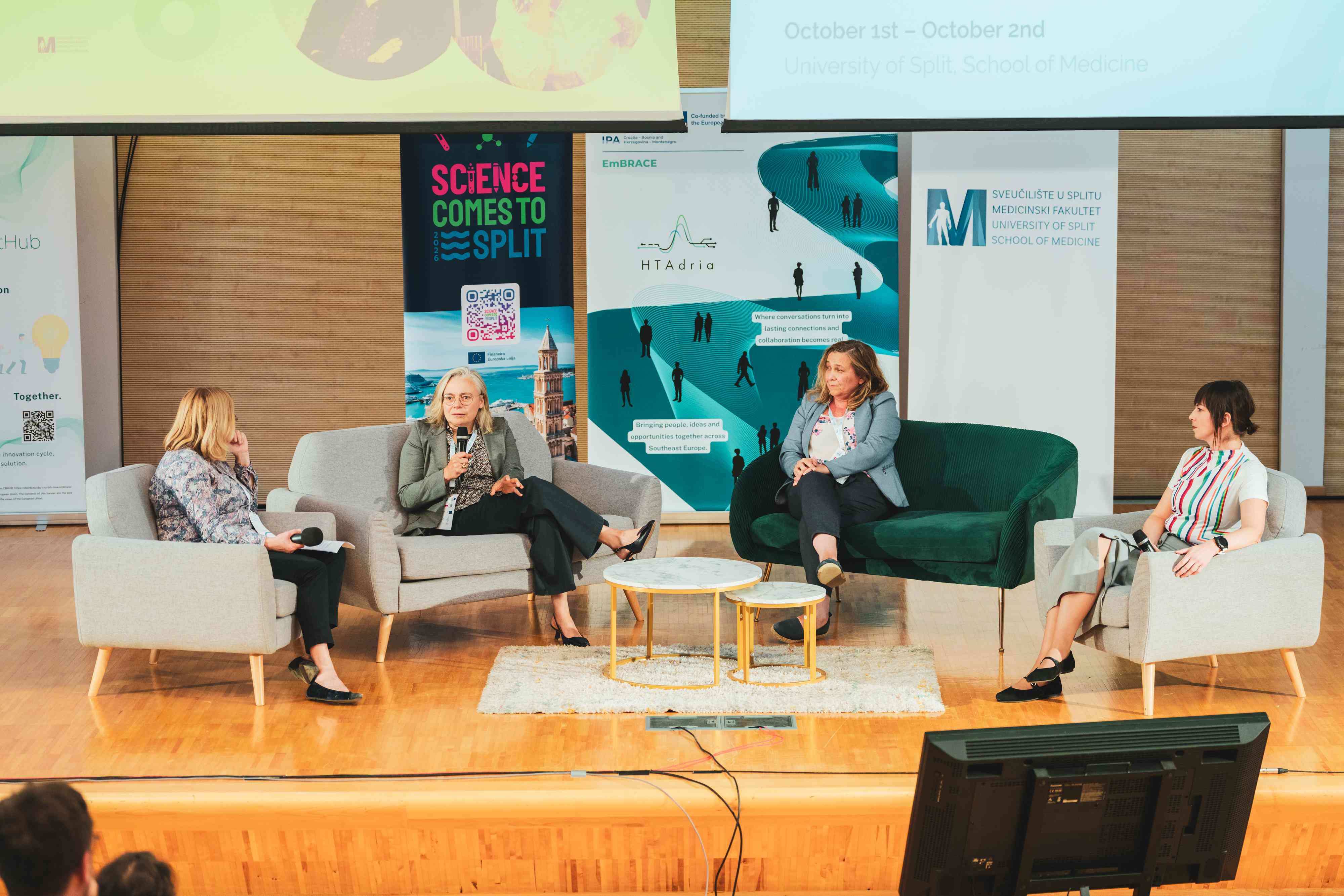
Cancer research offered a particularly relevant example of that translation challenge. A panel moderated by Joanna Broy from EIT Health brought together Marko Loparić from ARTIDIS, Eduard Vrdoljak from the University Hospital of Split, Miloš Ičević from AstraZeneca, Katarina Vukojević from the University of Split School of Medicine, and Rita Khoueiry from the International Agency for Research on Cancer (IARC/WHO). The discussion showed why moving from scientific discovery to patient impact requires much more than research excellence alone, it depends on clinical relevance, strong partnerships and pathways capable of translating knowledge into solutions that can ultimately reach patients.
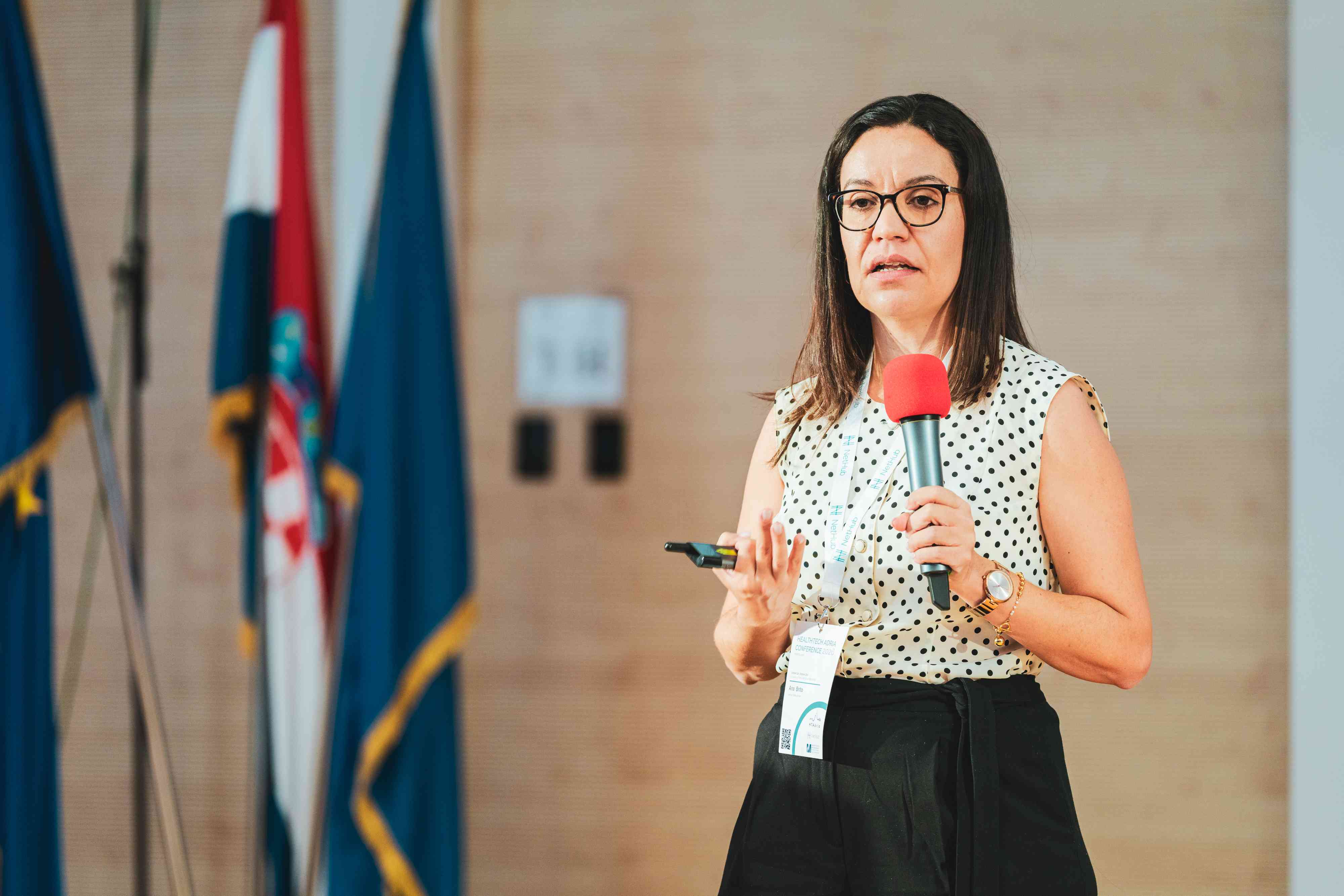
The final part of the day focused on reducing the gap between promising research and real-world use. Ana Brito from Instituto Pedro Nunes, Vesna Gabelica Marković from the University of Zagreb Faculty of Pharmacy and Biochemistry, Vedrana Perković-Hadl from BICRO BIOCentre Ltd., Amelia Compagni from Bocconi University, Ivana Kostić from Health Tech Lab, and Miloš Kostić from Tecnalia explored validation, regulatory planning, technology transfer and the importance of connecting academic research with healthcare and industry partners early enough to build a realistic path towards adoption.
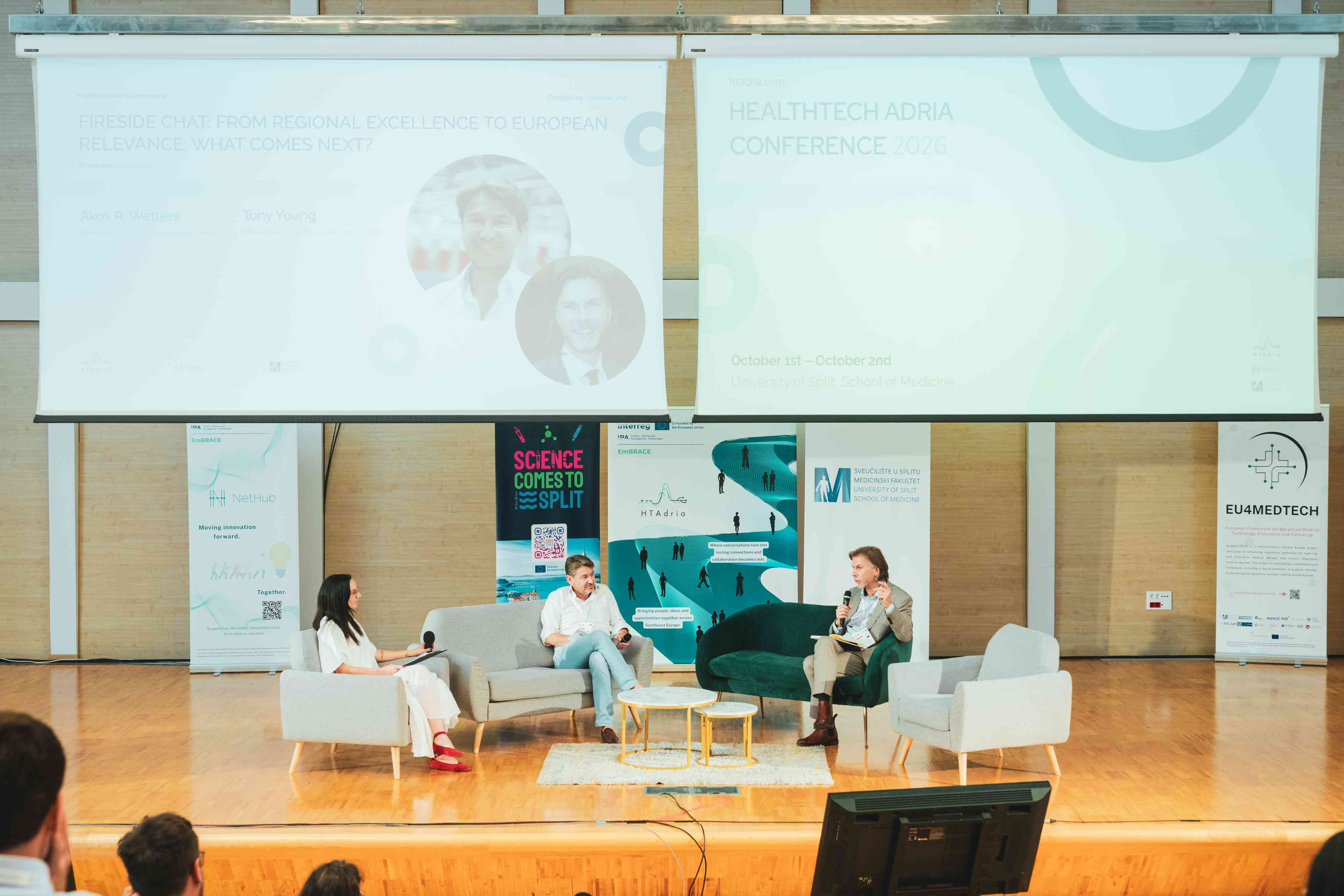
The day closed with a fireside chat moderated by Maja Mimica from NetHub, with Ákos Wetters from Kimitisik and Tony Young, bringing the conversation back to the question of how strong innovation from Croatia and Southeast Europe can gain greater European relevance through better collaboration, positioning and ecosystem support.
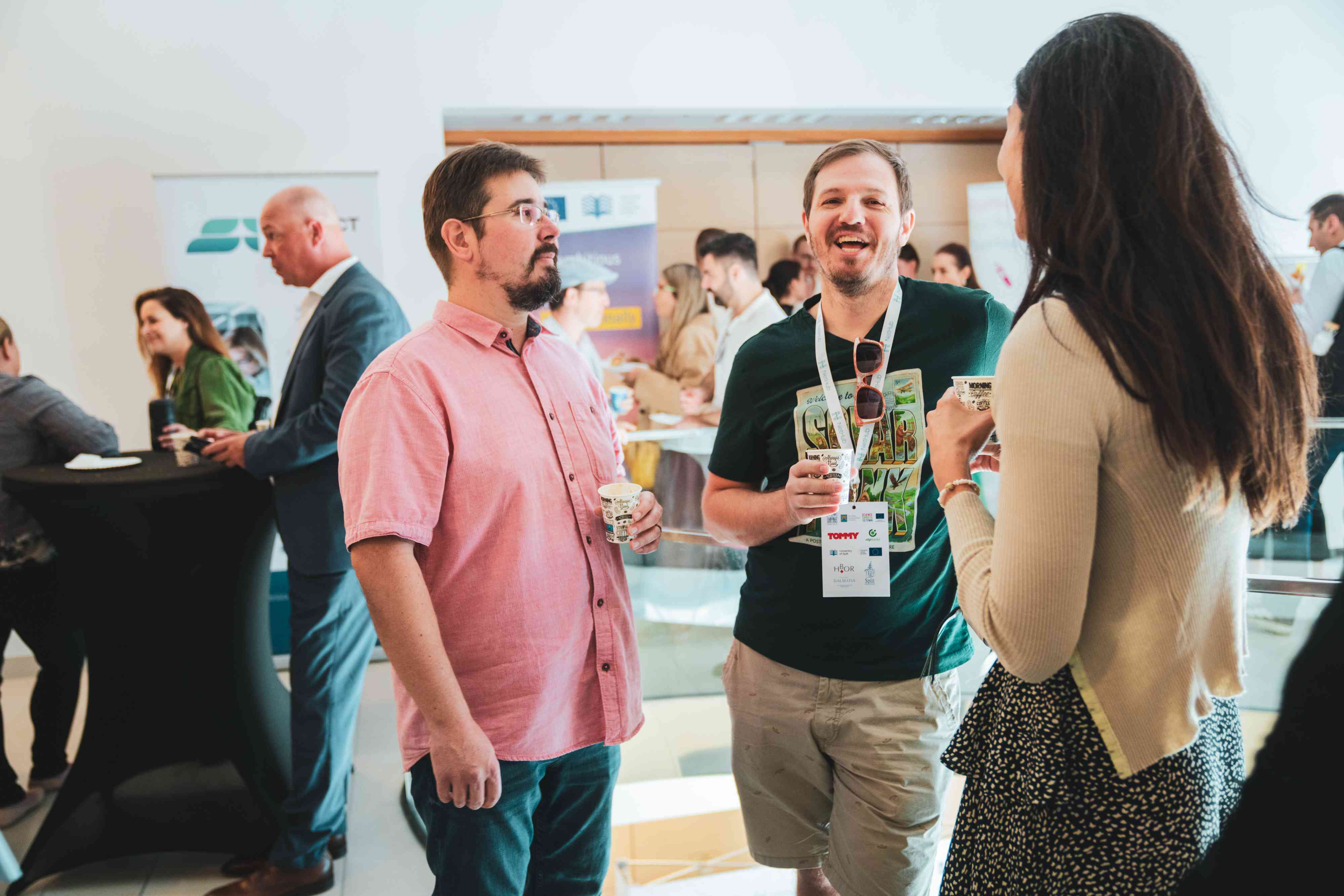
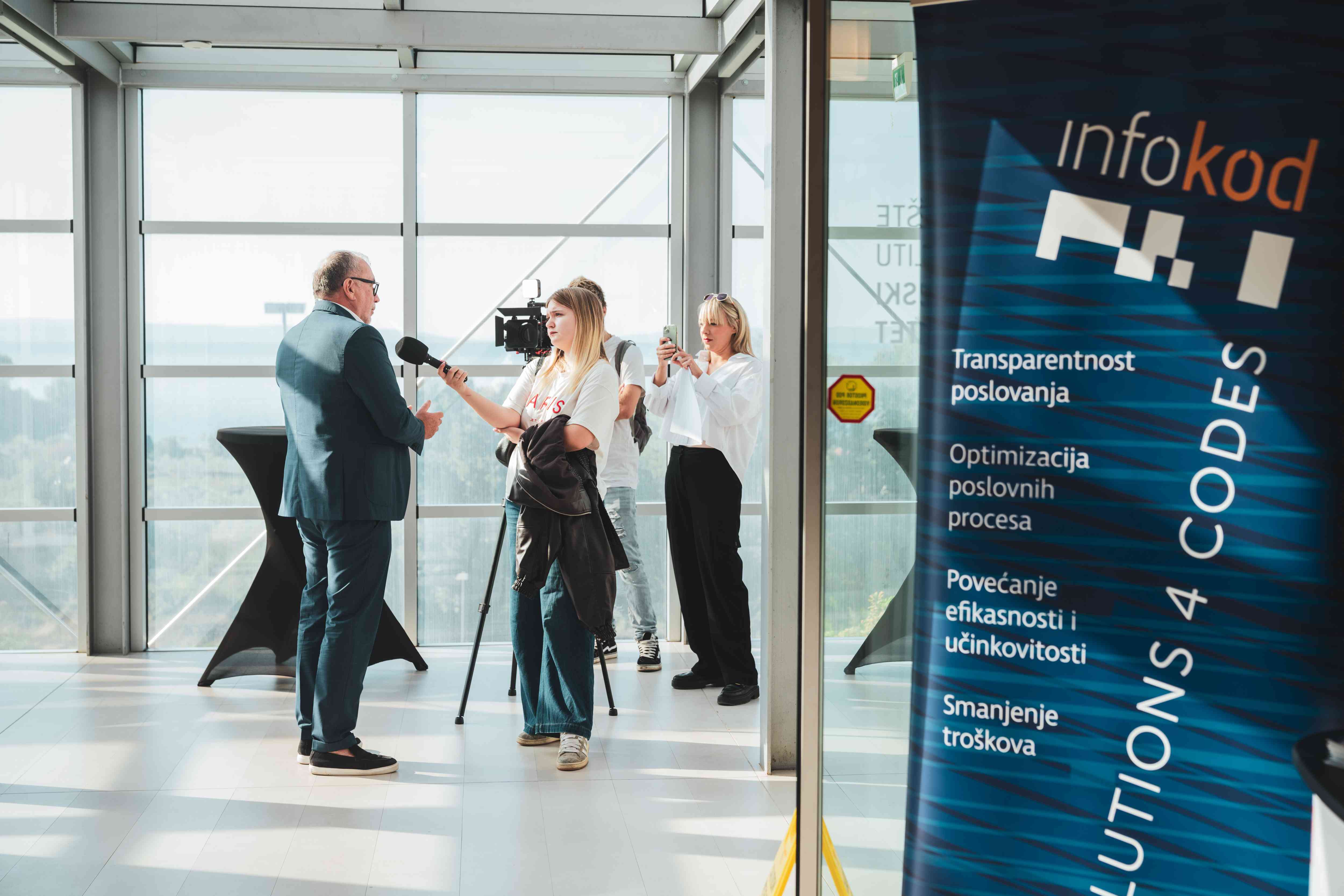
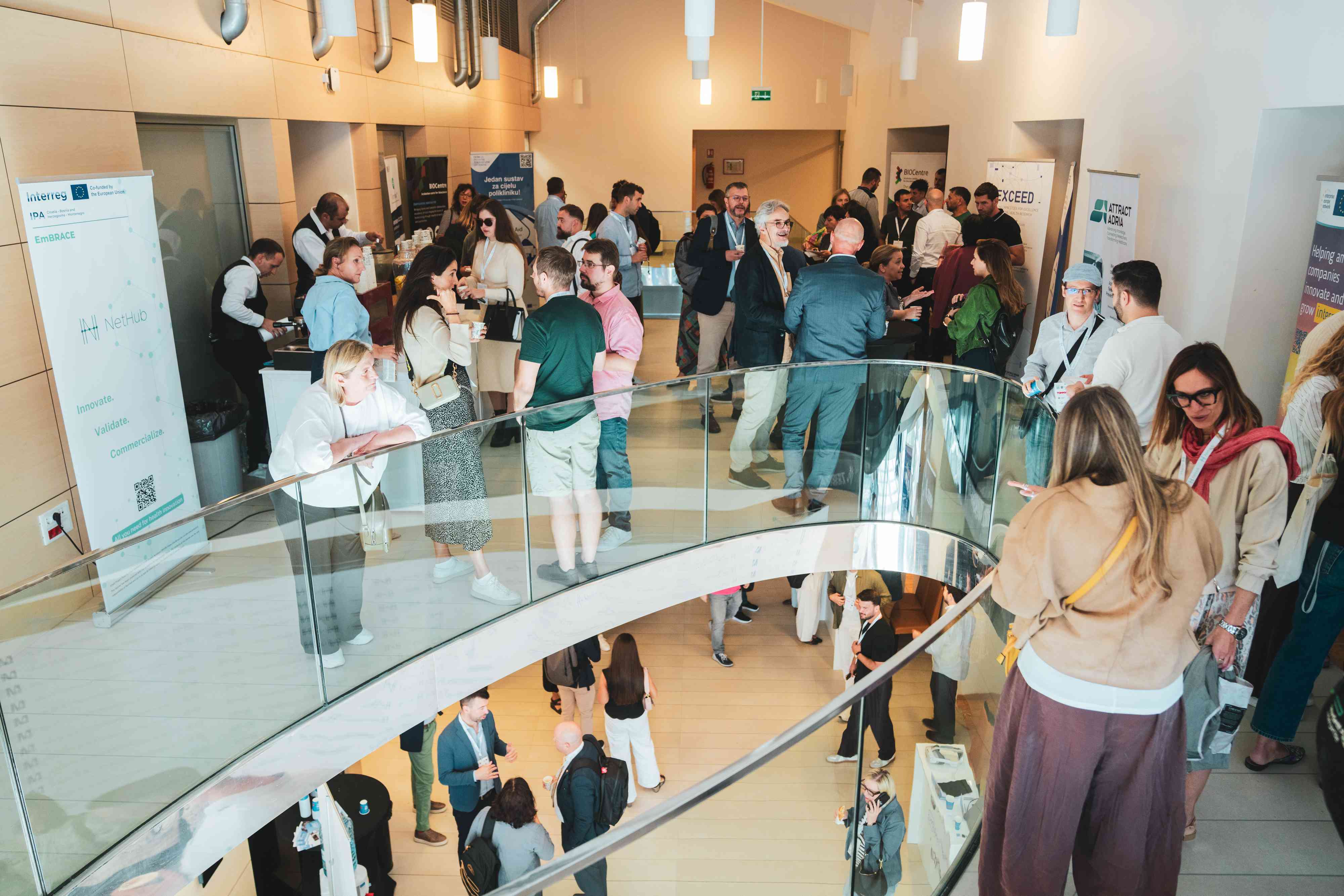
Beyond the stage, networking remained one of the strongest elements of Healthtech Adria. Coffee breaks and lunches gave participants the opportunity to continue conversations, meet potential partners and exchange ideas in a more informal setting. A new addition to this year’s conference was a dedicated exhibition area with six stands, giving companies and organisations the opportunity to showcase their work directly to participants throughout both days. The conference was designed not only around the knowledge shared on stage, but also around the connections that can start between sessions.
Ultimately, the first day reinforced a message that ran through the entire programme: health innovation does not move from research to patients through technology alone. It requires the right partners, policy environment, data infrastructure, regulatory strategy, funding and implementation pathways – and a community willing to connect those pieces together.